
ST-02 — Black Kurotomesode Kimono
Source Textile — Kimono Silk
Black silk kimono with decoration concentrated along the hem, leaving the upper body largely unpatterned in accordance with formal kimono design. The composition features phoenix birds moving through flowering branches, rendered in gold, ivory, muted greens, and soft greys against the dark ground.
The motifs extend fluidly across the garment panels and combine painted elements with gold embroidery and metallic accents. The imagery forms a balanced decorative scene typical of formal kimono intended for ceremonial occasions.
Chosen for the sweeping phoenix motif highlighted with gold couching embroidery, creating a luminous focal element across the hem.
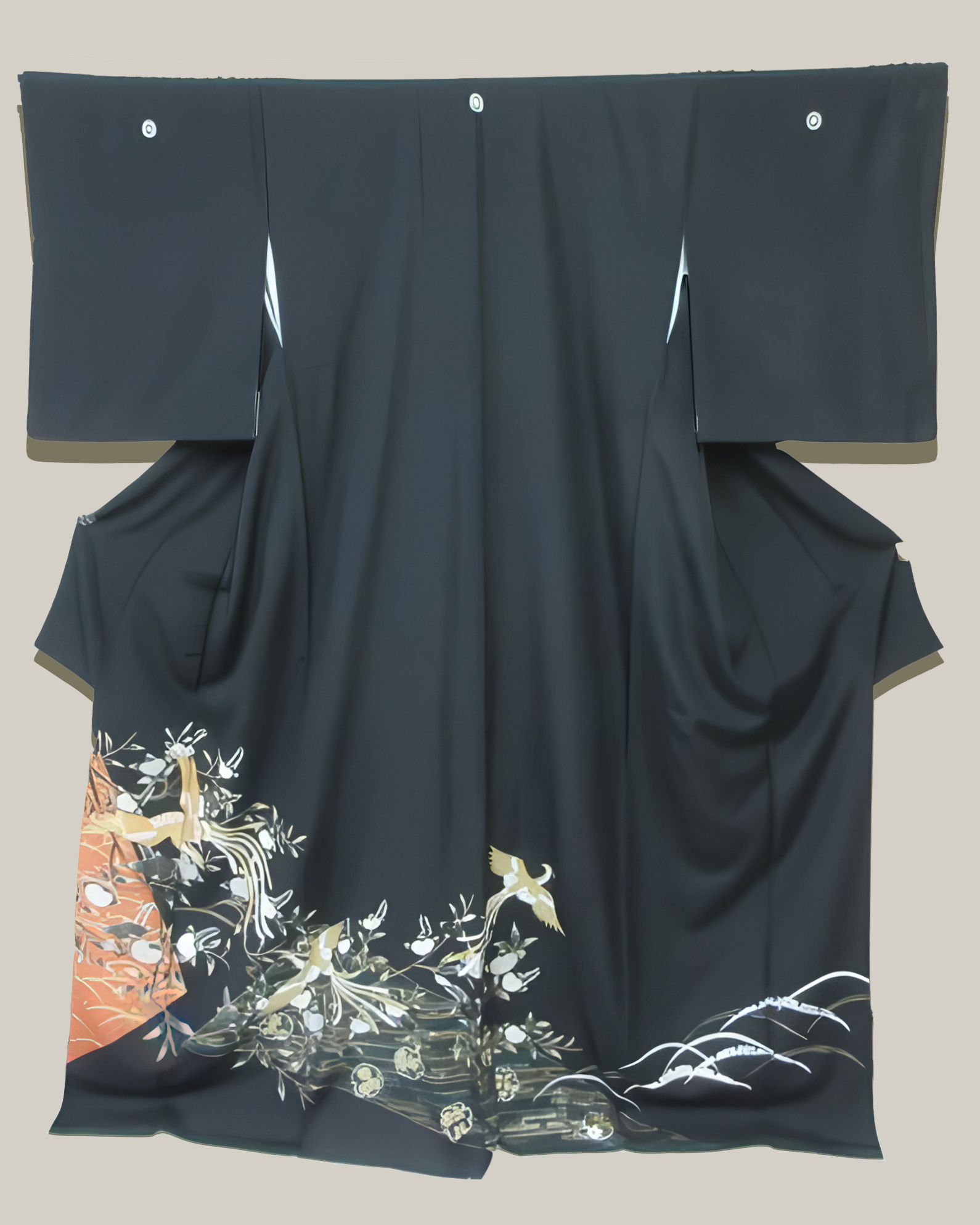
Identification
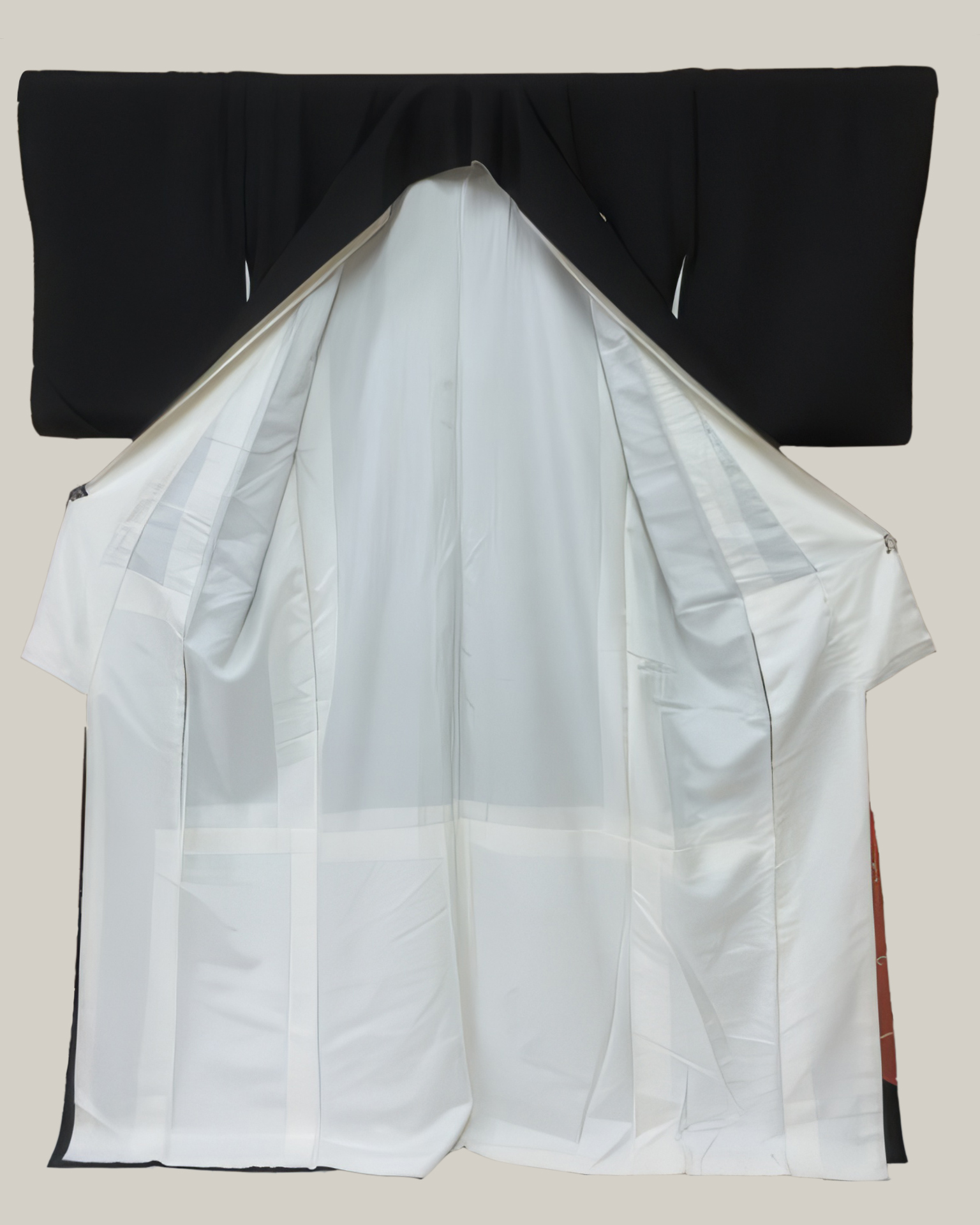
Visual analysis
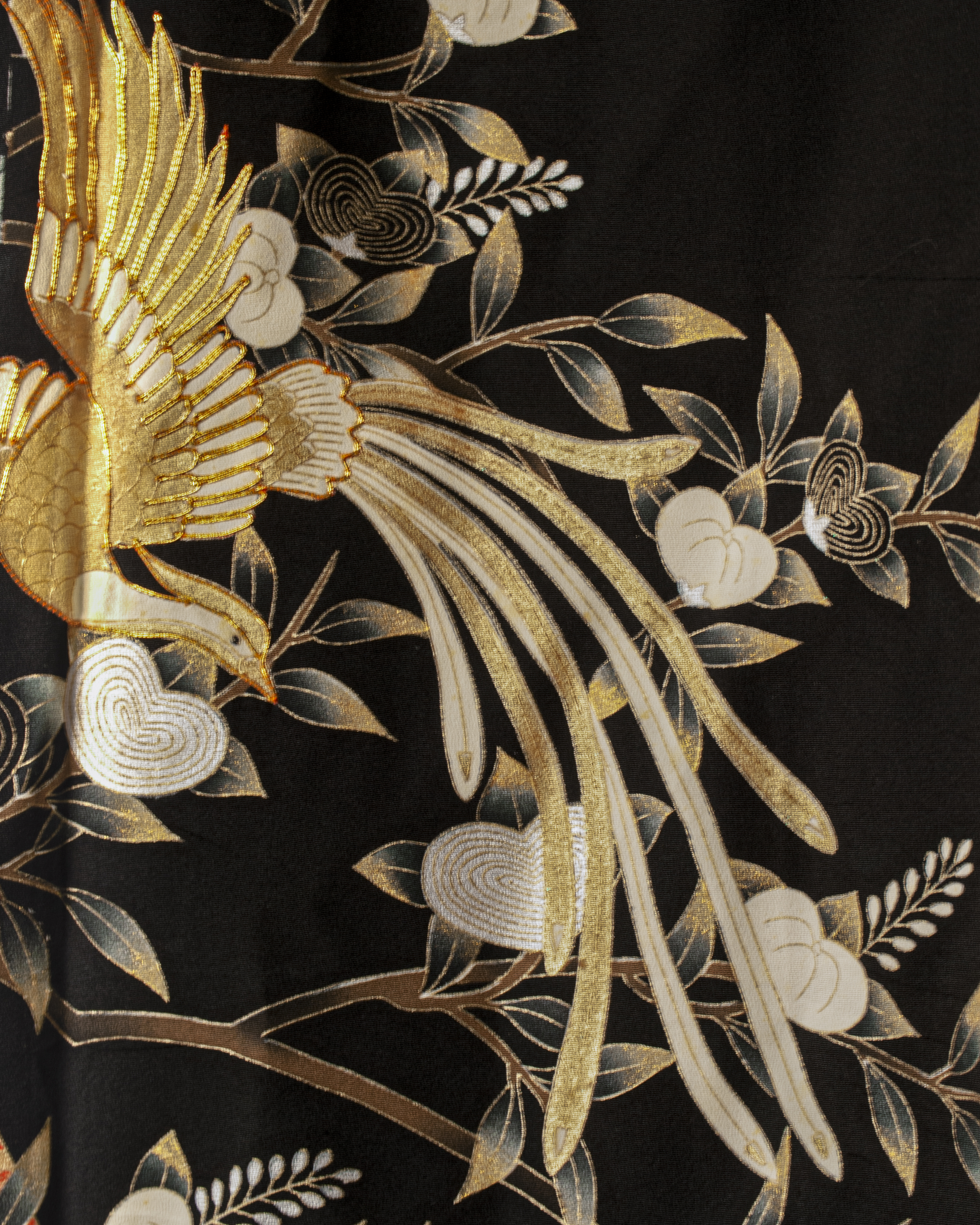
Black silk ground with decoration concentrated across the lower portion of the garment, leaving the upper body largely unpatterned in keeping with formal kimono layout. The main scene is composed of large phoenix (hō-ō) figures in flight, their long trailing tail feathers rendered in gold, ivory, and warm beige. Branches with stylized blossoms and leaves extend across the hem, painted in muted greens, greys, and soft metallic tones. The birds move diagonally through the composition, creating a flowing visual movement across the garment panels.
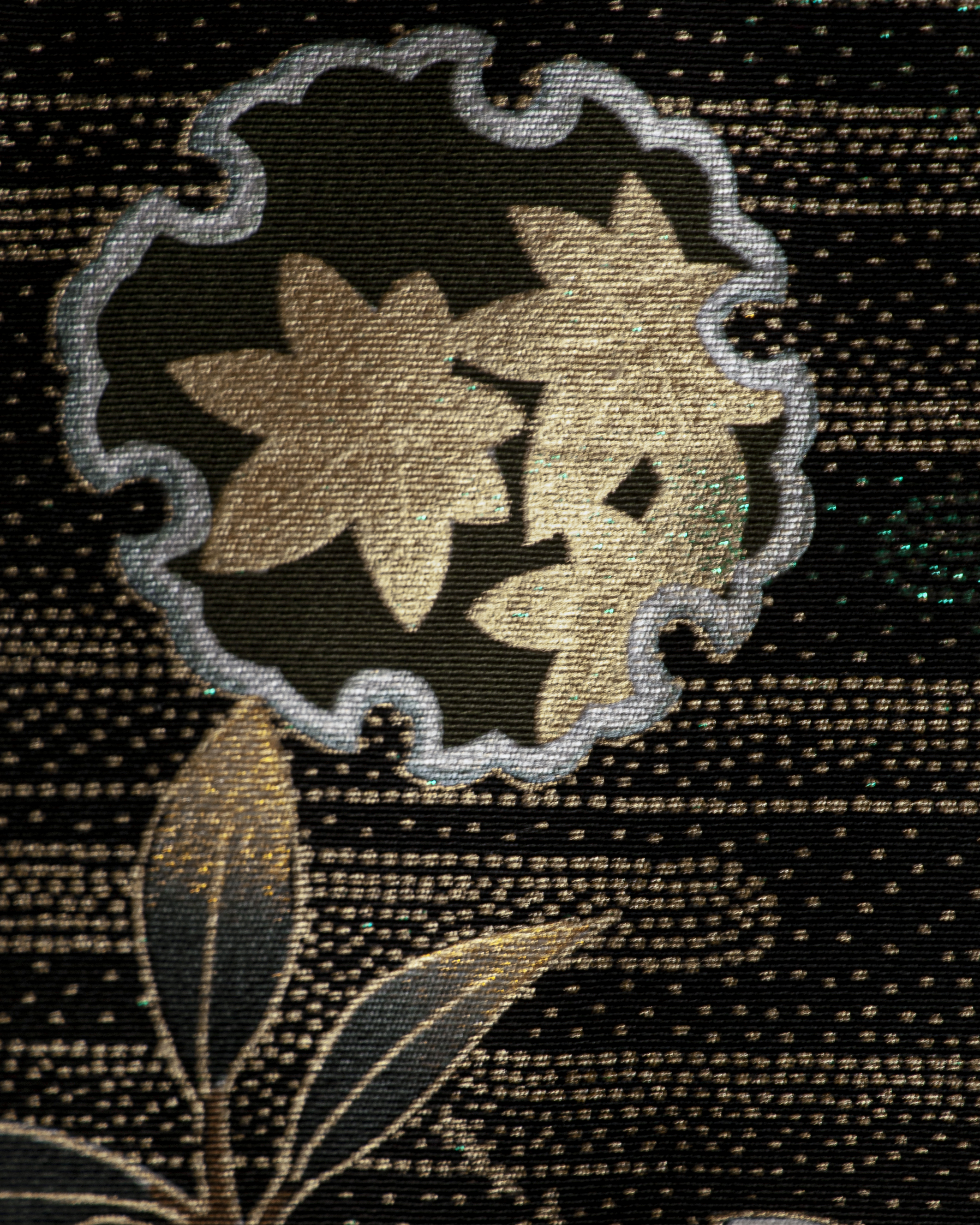
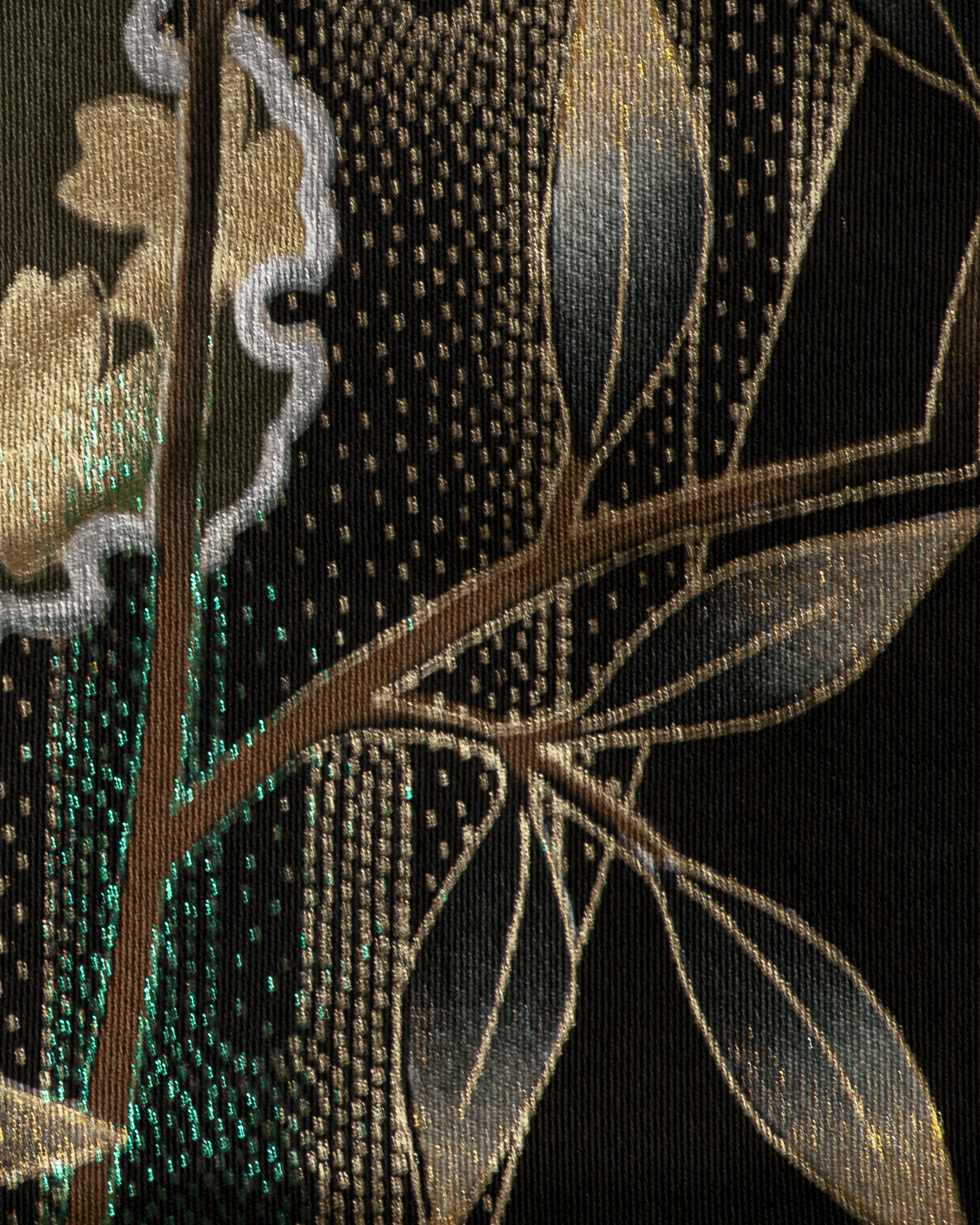
Additional areas of the hem show finely textured fields composed of dense dotted patterns and softly shimmering pigments. Within these areas appear small cartouche-like forms containing maple leaves and other stylized plant motifs, outlined in pale grey. Gold embroidery accents highlight parts of the phoenix wings and feathers, adding relief against the dark silk ground. The motifs are asymmetrically distributed and continue seamlessly across the vertical panel seams, emphasizing the continuous landscape-style composition typical of formal kimono design.
Techniques
友禅染 (Yūzen-zome) Hand-applied resist dyeing used to create the main pictorial motifs. The outlines are drawn with resist paste and pigments are brushed into the enclosed areas, allowing precise forms and soft tonal shading.
刺繍 (Shishū – embroidery) Sections of the phoenix—especially wings and tail—are enhanced with embroidery to add relief and luminosity against the black silk ground.
金駒刺繍 (Kinkoma shishū) A couching technique where gold thread is laid on the surface and secured with small stitches. It forms the bright outlines of the phoenix feathers.
金彩 (Kinsai – gold decoration) Application of gold pigment and metallic powders to accent outlines and decorative details. This technique produces the shimmering highlights within the feathers, leaves, and cartouche motifs.
金砂子 (Kinsunago – scattered gold powder) Fine metallic particles sprinkled onto adhesive areas of the design, producing the subtle sparkling texture visible in the background.
地紋 (Jimon – woven ground pattern) A subtle woven pattern in the silk base fabric that becomes visible as light moves across the surface.
Motifs & significance
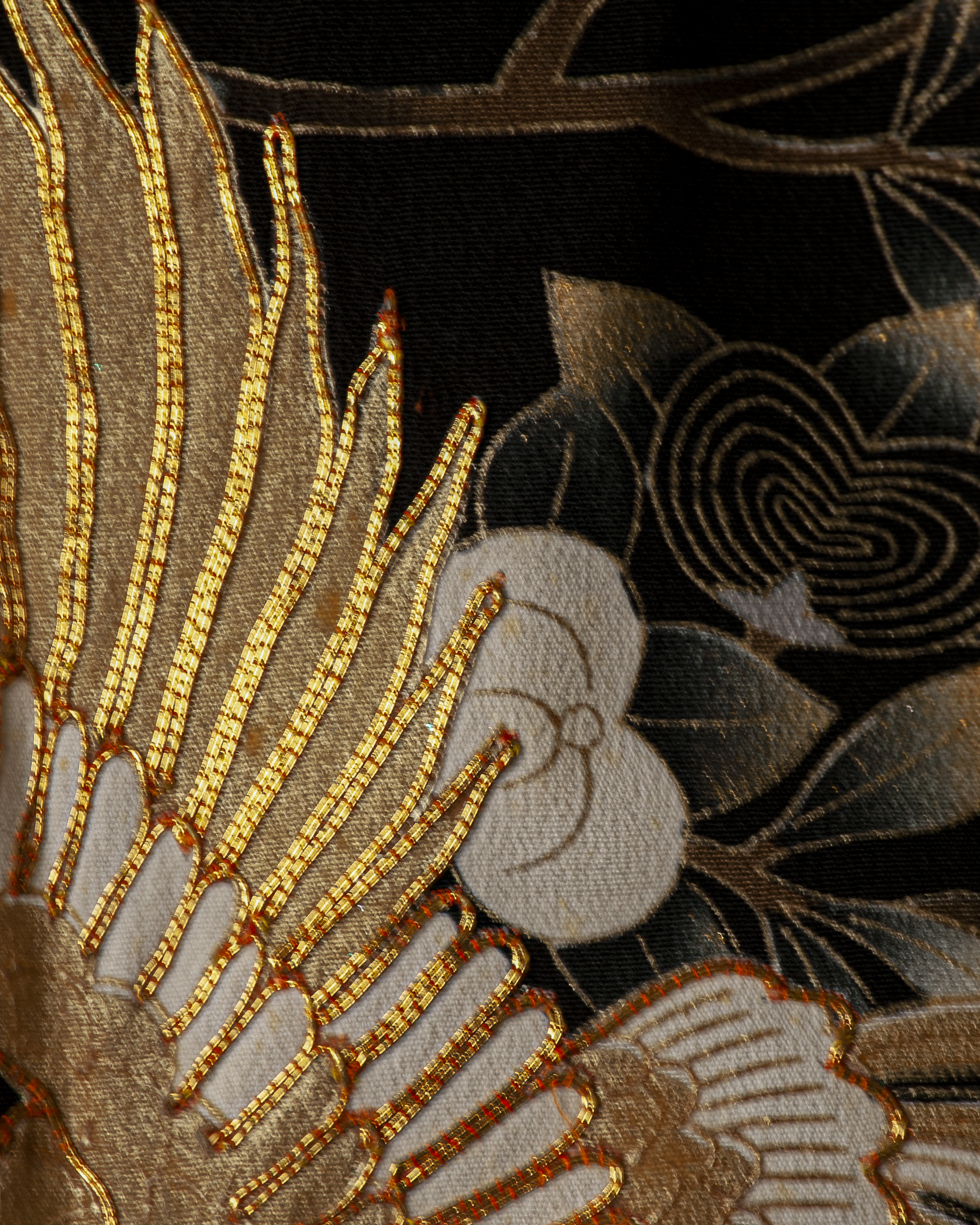
The central motif is the phoenix (鳳凰, hō-ō), shown in flight with long, flowing tail feathers rendered in gold and ivory. In Japanese decorative tradition the phoenix symbolizes harmony, renewal, and the arrival of a prosperous age, making it a fitting motif for formal celebratory garments. Around the birds extend flowering branches (花枝文) carrying stylized blossoms and leaves, suggesting vitality and the cyclical rhythms of nature.
Interspersed within the composition are small circular cartouches containing maple leaves (楓, momiji). While maple leaves are closely associated with autumn in Japanese aesthetics, in textile design they often function as refined decorative elements evoking seasonal beauty and cultivated taste. Together, the phoenix, flowering branches, and seasonal motifs form an ensemble of auspicious imagery (瑞祥文様) traditionally linked with prosperity, longevity, and festive occasions.
Dating
Likely produced in the late Shōwa period (1970s–1980s), based on the scale of the motifs, the combination of yuzen dyeing with prominent gold embroidery, and the decorative metallic accents. Such richly ornamented formal designs remained common in ceremonial kimono production during the later decades of the 20th century.
Condition
Overall structure appears intact. Storage creasing is visible. No major staining or abrasion is evident in the provided image set.
Before cutting: check metallic areas for flake loss, confirm pigment stability, and test for rub-off on the black ground.
Interactive map
Click on a kimono panel to see the works derived from it.
Tags
Source Textile: ST-02
Trace:
cleve.st / ST-02