
Method
The Garment Comes First
Each CLEVE work begins with a complete Japanese garment — kimono, obi, or obijime. We do not work with anonymous fabric or pre-cut vintage fragments.
Garments are sourced through Japanese secondary markets and specialist dealers. Selection takes time: reviewing listings, assessing condition from photographs, checking construction details, and comparing quality. Structure and technique matter as much as motif. Shipping, customs, and documentation are the next part of the process. This work is not visible in the finished object, but it is essential.
These garments are not new. They often show age: slight discoloration, areas of wear, small stains, weakened silk, or storage marks. We do not erase this history completely. Strong areas are selected, fragile zones are stabilized, and minor irregularities may remain visible. They reflect the material’s age.
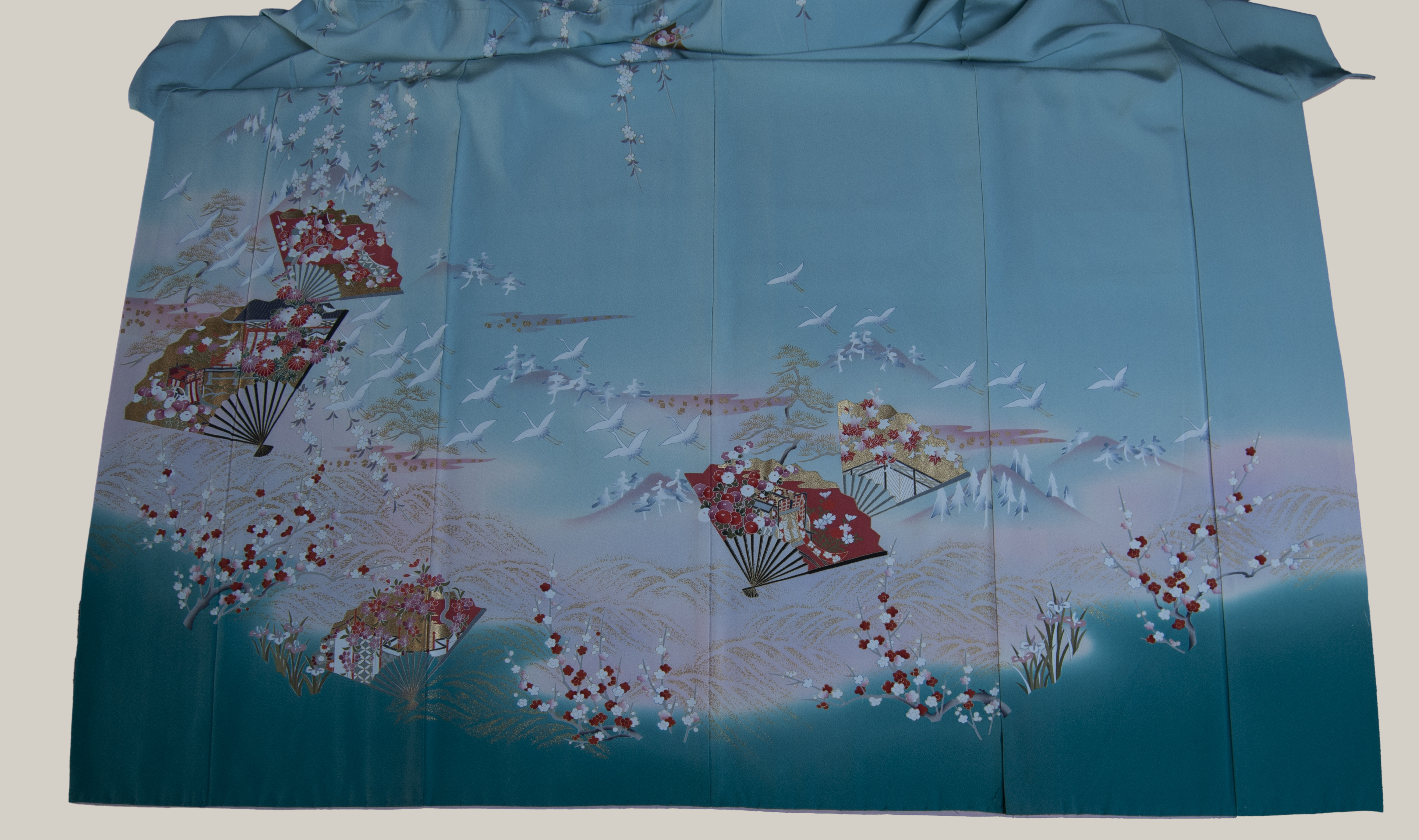
Before any intervention, the garment is documented in its intact state. Type, construction, and visible techniques are recorded.
Studying the Source
Before cutting, the garment is examined in detail.
High-end kimono such as 訪問着 (hōmongi) or 留袖 (tomesode) are composed garments. Motifs are placed with intention, often flowing across seams and concentrating near the hem. Casual garments such as 浴衣 (yukata) usually carry all-over repeat patterns and follow a different logic.
Kimono are made from narrow bolts of cloth (反物, tanmono), typically around 36–40 cm wide. The garment consists of long rectangular panels joined together. Because of this construction, images are distributed across seams. Large uninterrupted compositions are rare. This structural reality makes later division complex.
Study is not only technical. It is the stage where we decide how the textile can be shown once it is no longer worn. A kimono is designed for a moving body. When removed from that function, its structure must be reconsidered.
We analyse motif hierarchy, panel placement, grain direction, and visible techniques such as 友禅染 (yūzen-zome), 金彩 (kinsai), or 刺繍 (shishū). From this, a clear plan is developed for how the textile will be presented.
Separating the Garment
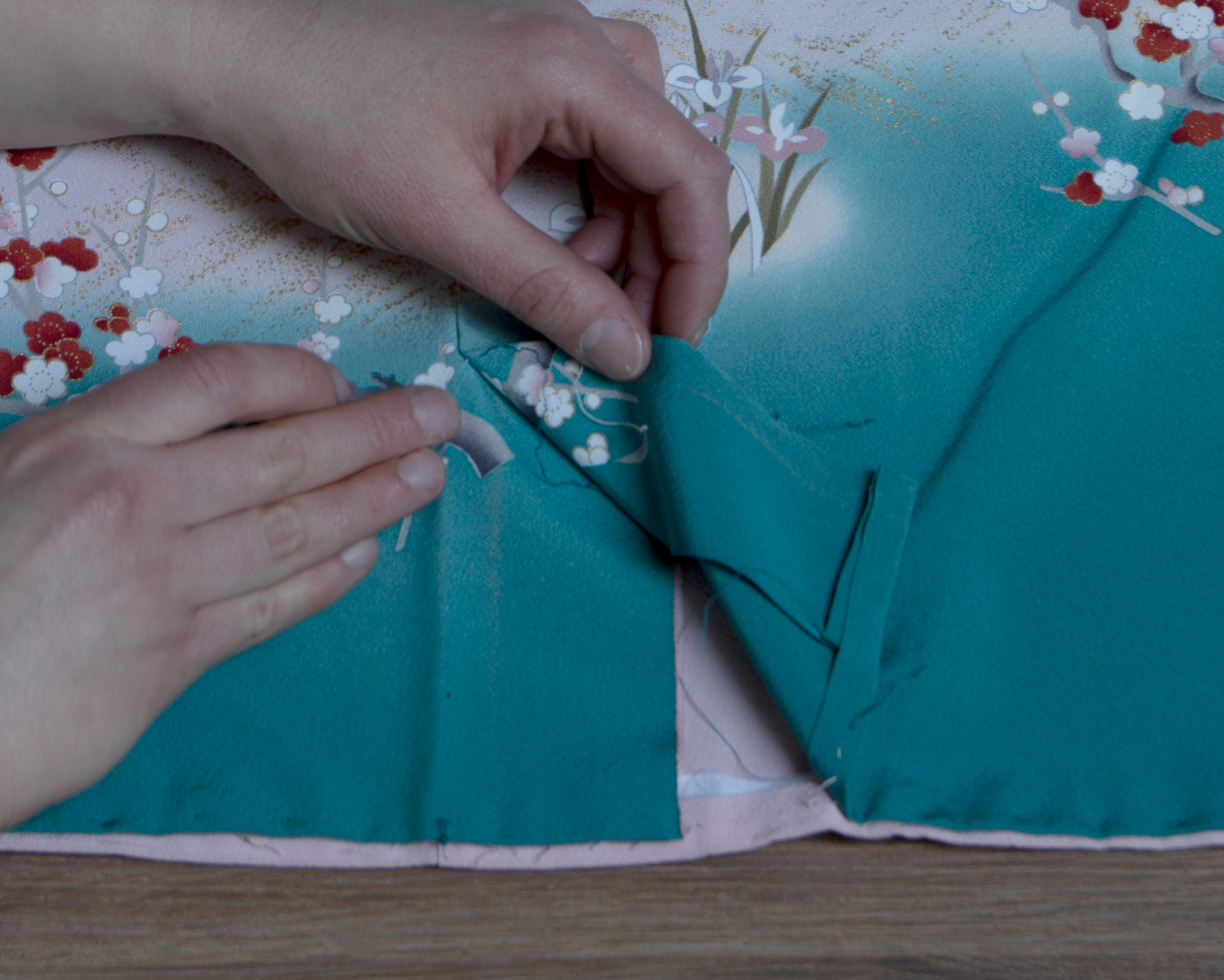
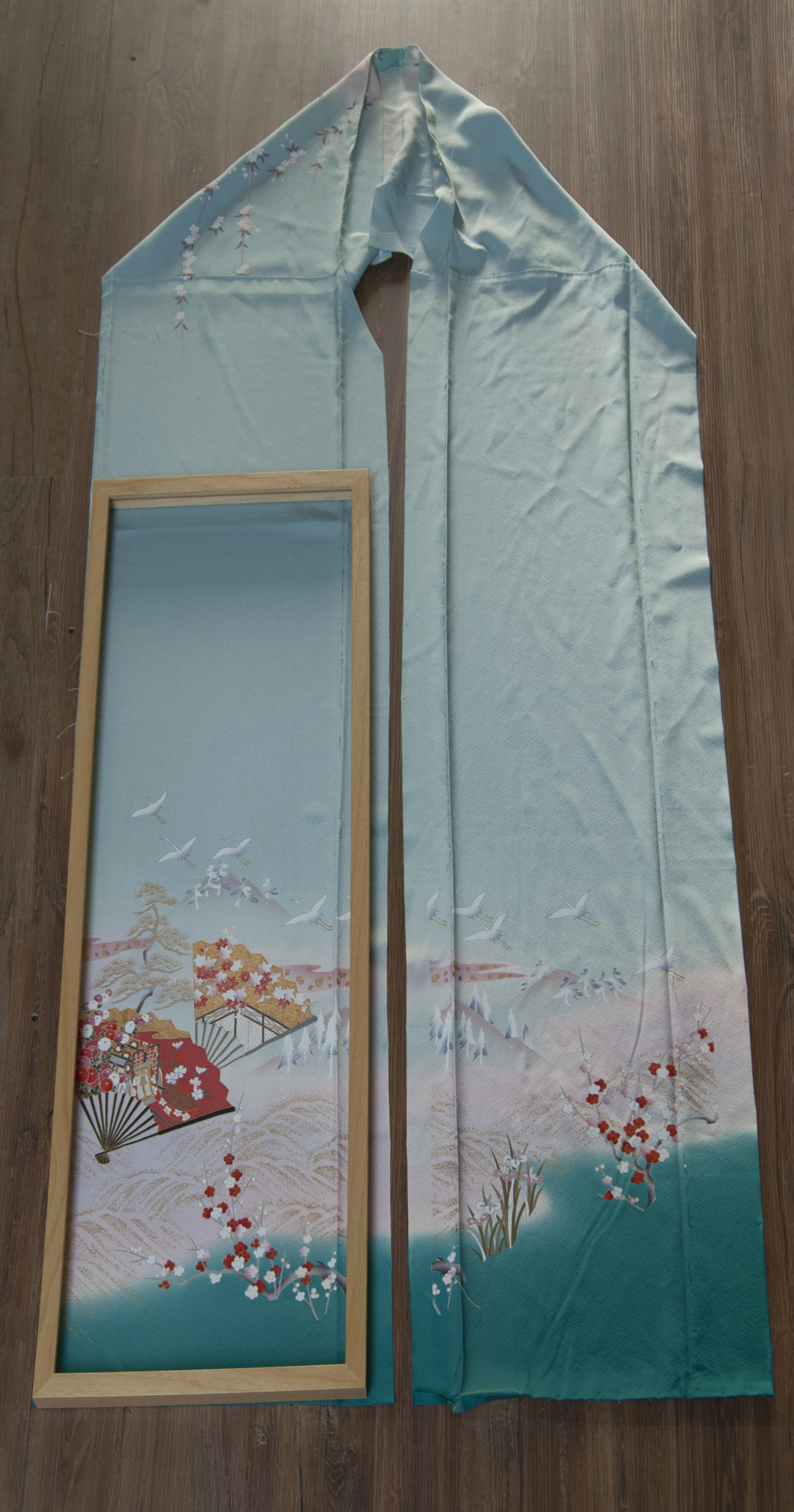
Traditional kimono are constructed from narrow panels sewn together with minimal waste. The garment is first carefully unstitched along its seams and returned to panel form. This reveals hidden fading, tension points, repairs, and the condition of the lining.
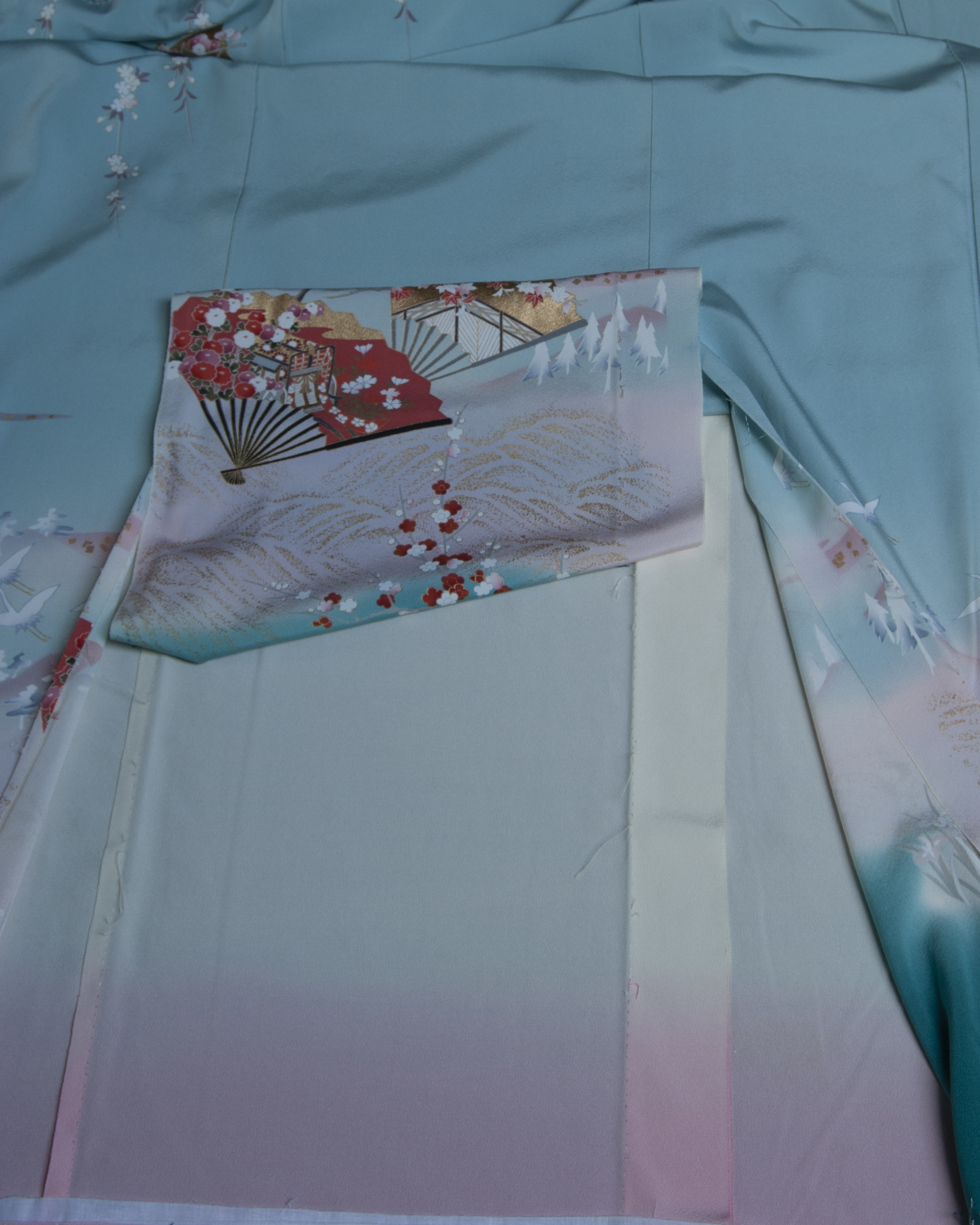
Many kimono include an inner lining (裏地, uraji). This backing silk is examined separately. Depending on quality and condition, it may be reused for smaller works or structural elements, or it remains archived with the garment.
Kimono silk is not cut across composed motifs without reason. Sections are taken along existing panel lines whenever possible.
Throughout this process, the source garment remains documented and traceable.
Developing the Format
Once separated into panels or sections, the textile is developed into a format.
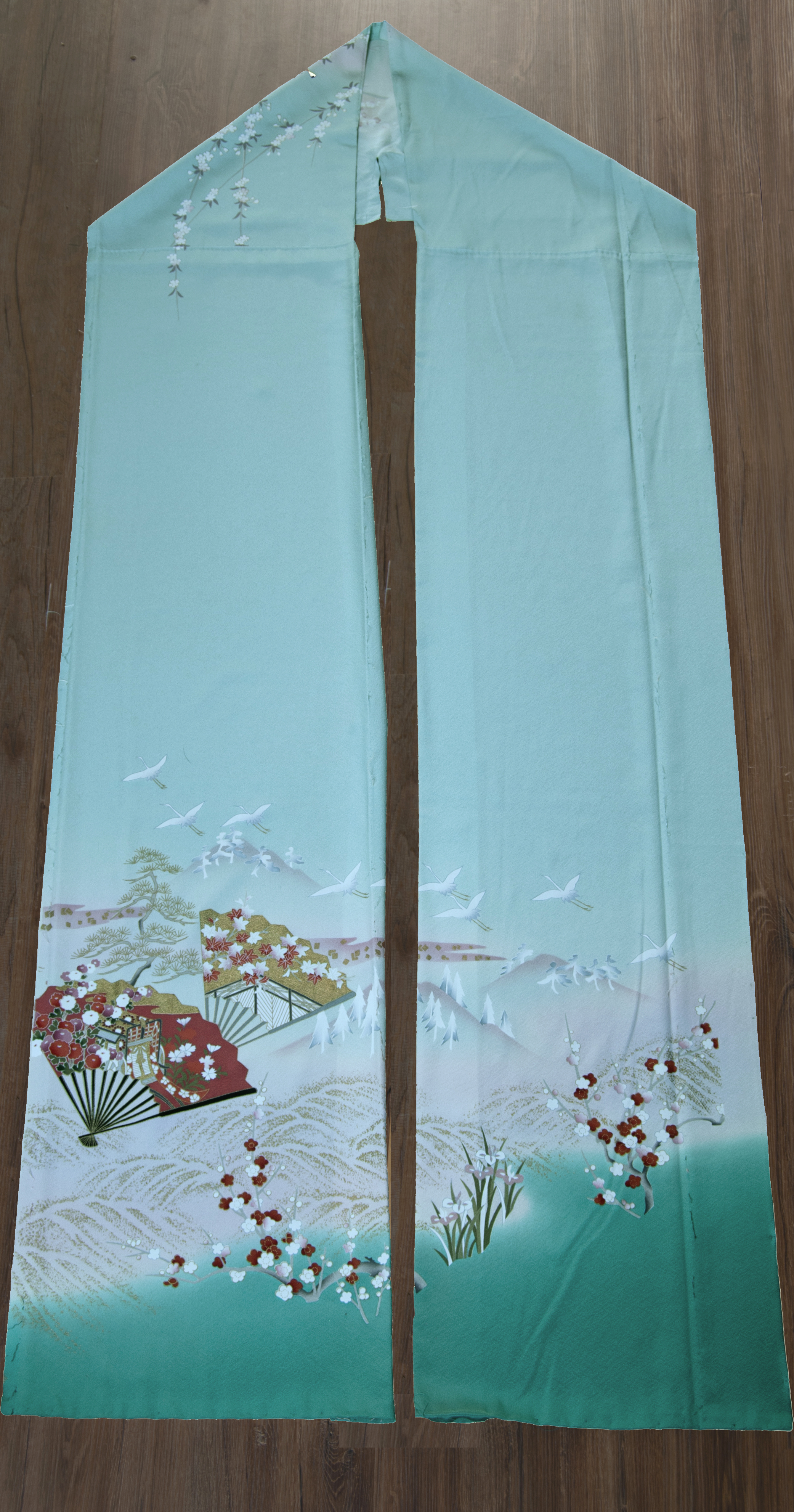
A kimono was created to function on the body. The question is how it should function now. Some works isolate a composed scene. Others retain panel proportions to make garment structure visible. In certain cases, multiple sections are arranged to reflect how the garment once moved or wrapped.
Formats are not imposed in advance. They are developed in response to the textile’s structure, scale, and technique.
Kimono silk is not cut across composed motifs without reason. Sections are taken along existing panel lines whenever possible. The integrity of the original design governs how the textile is divided.
Obi follow a different logic. They are long, continuous textiles and allow sectional division without interrupting a structured garment panel. Their density, weaving, or embroidery may require additional stabilization, which is addressed during construction.
Release logic
Works are released in Studies.
A Study brings together one or more garments — kimono, obi, and sometimes related accessories — into a defined group. Textiles are chosen for structural or technical relationships, not only for color.
In traditional dress, decoration and function are inseparable. A kimono is both garment and image. An obi is both fastening system and dominant visual element. Composition follows use.
This relationship continues within a Study. Larger wall works emphasize composition and structure. Smaller textile objects translate the same material into functional scale. The difference is use and size, not importance. All pieces remain traceable to their source garment.
Obi often allow elongated or repeated formats due to their continuous construction. Kimono remain panel-based and compositionally structured. These differences shape how each material is developed.
Studies are not seasonal collections. They begin when the material constellation is clear and conclude when the available sections have been resolved.
Framing and stabilization
Stability determines what is possible.
Fragile silk may be reinforced. Lightweight backing or internal padding can be added to reduce tension. Original lining silk may be reused as structural support where appropriate.
Additional materials are chosen for long-term behavior and remain visually neutral.
Wall works are mounted in high-grade wooden frames with conservation-standard glazing. Museum glass is used to reduce reflection and protect against UV exposure.
Materials support the textile. They do not dominate it.
Archive and Provenance
Every garment and every object is documented.
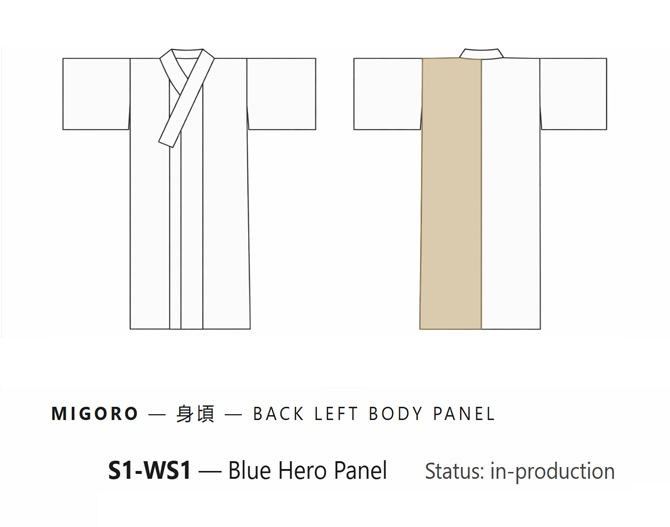
The intact textile is recorded before separation. Each finished work receives an individual ID and remains linked to its source garment. Remaining sections of the garment are archived.
Objects are listed with clear status: available, sold, or withdrawn. Sold works remain visible. Provenance is continuous.
Certificate of Origin
Each object is accompanied by a printed certificate.
The certificate includes the object ID, the Study name, the source garment reference, and the date of completion. A unique reference code allows the owner to access the corresponding archive entry on the CLEVE website and view the documented source garment and related works.
The certificate ensures that the garment–object relationship remains verifiable over time.