
ST-01 — Blue Hōmongi Kimono
Source Textile — Kimono Silk
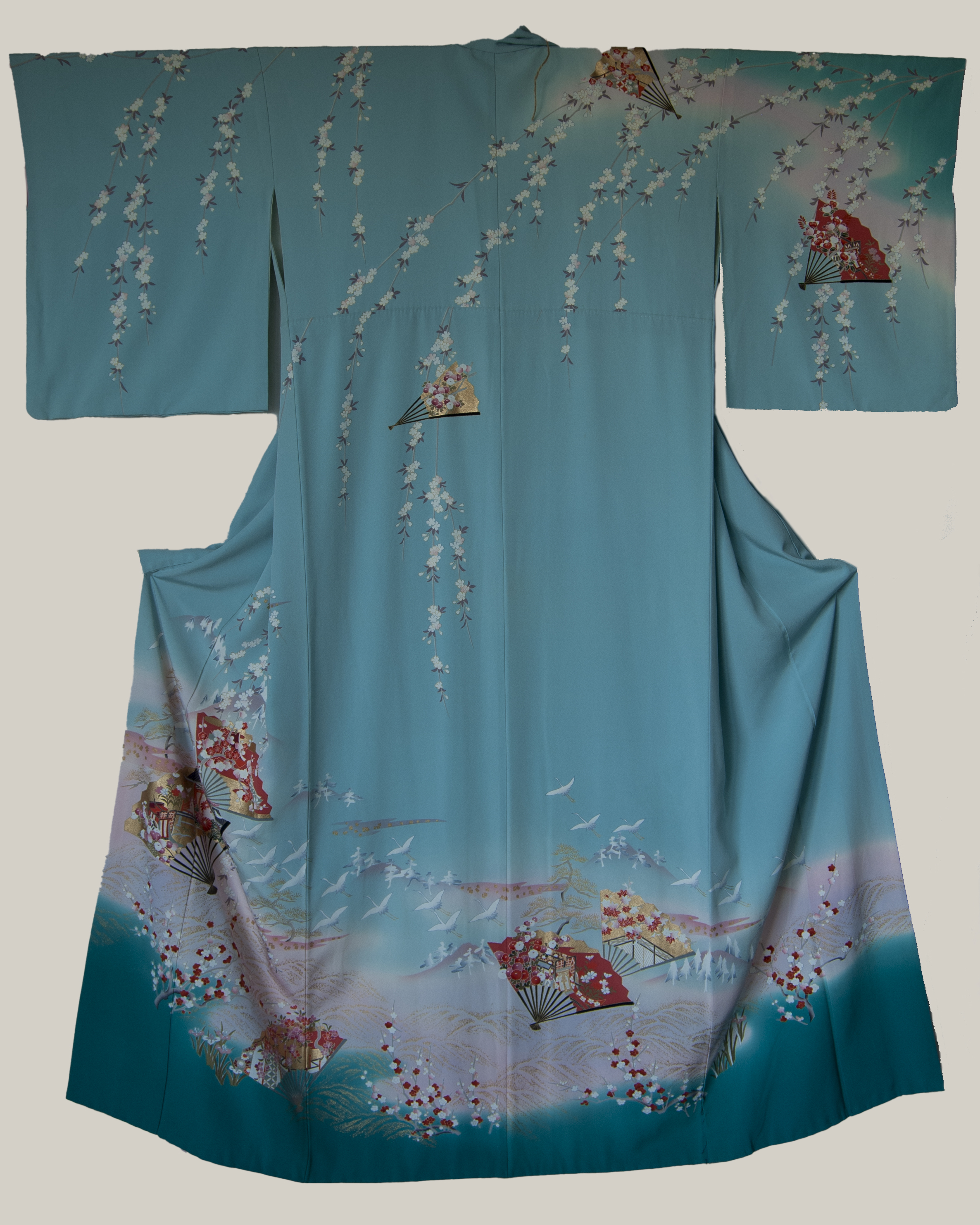
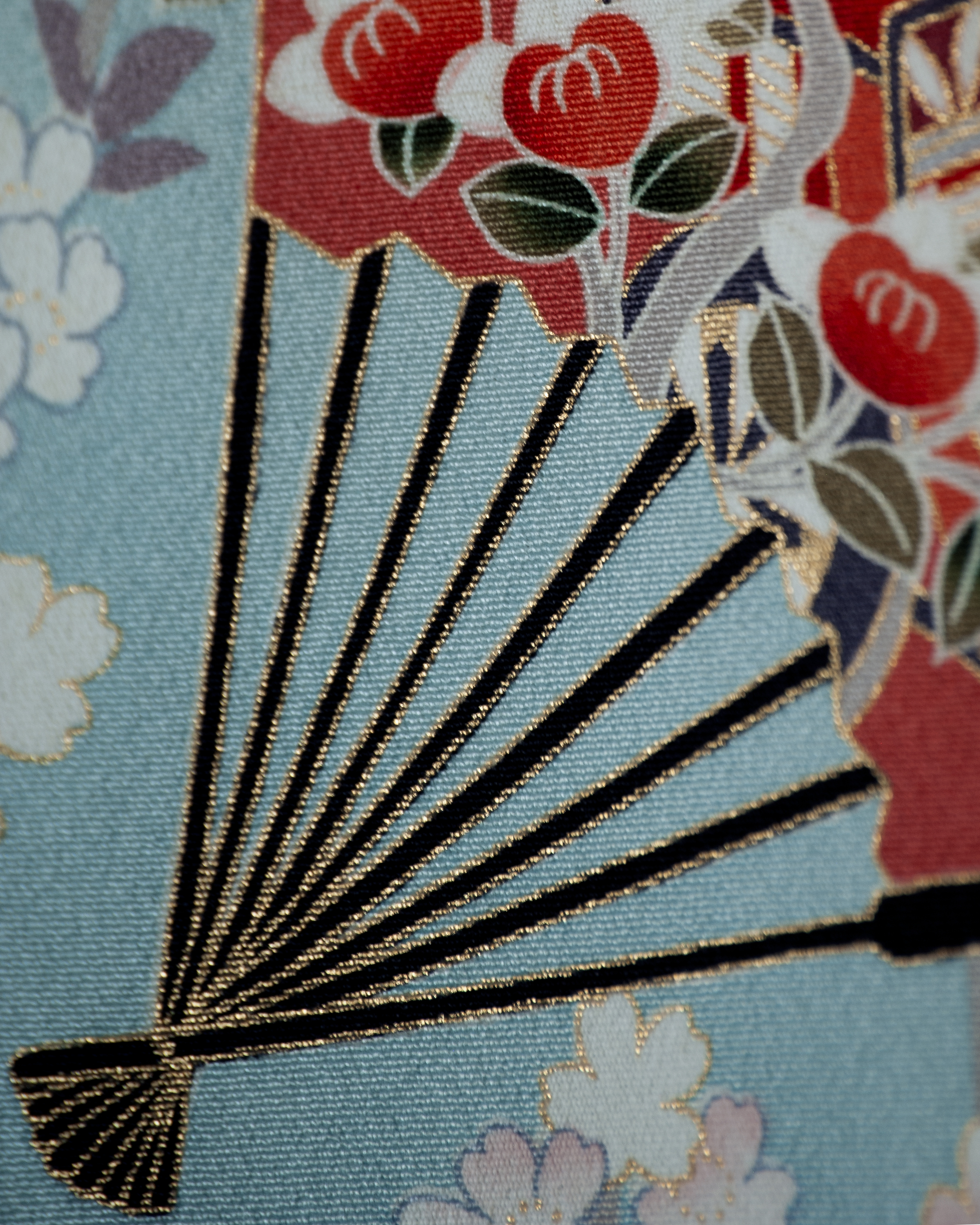
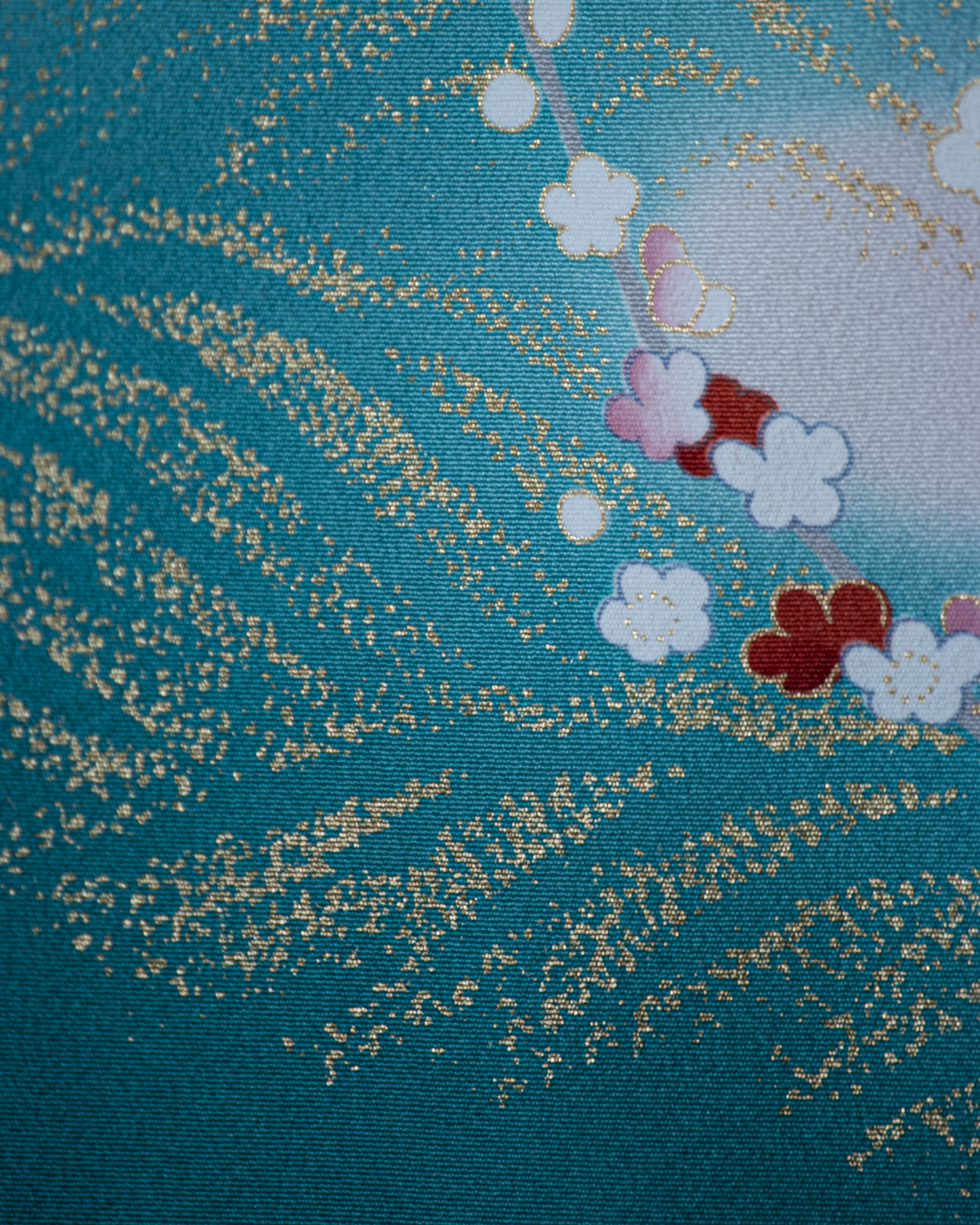
Pale celadon silk carries a hem-focused panorama of folding fans, cranes, pine, and early blossoms drifting across a deepening teal horizon. The gradient gathers the scene toward the lower field, where landscape and ornament meet in quiet balance. Executed in yuzen with restrained gold application, the surface holds a soft luminosity rather than overt brilliance.
Chosen for the richness and composure of its palette, this kimono reveals its refinement in the fans themselves — vermilion fields edged in fine gold, suspended between mist bands and passing cranes. The gold dusting settles lightly into grasses and ribs, catching light only when it moves. Likely Late Shōwa formal visit-wear, the garment reads as celebratory yet composed.
Identification
Visual analysis
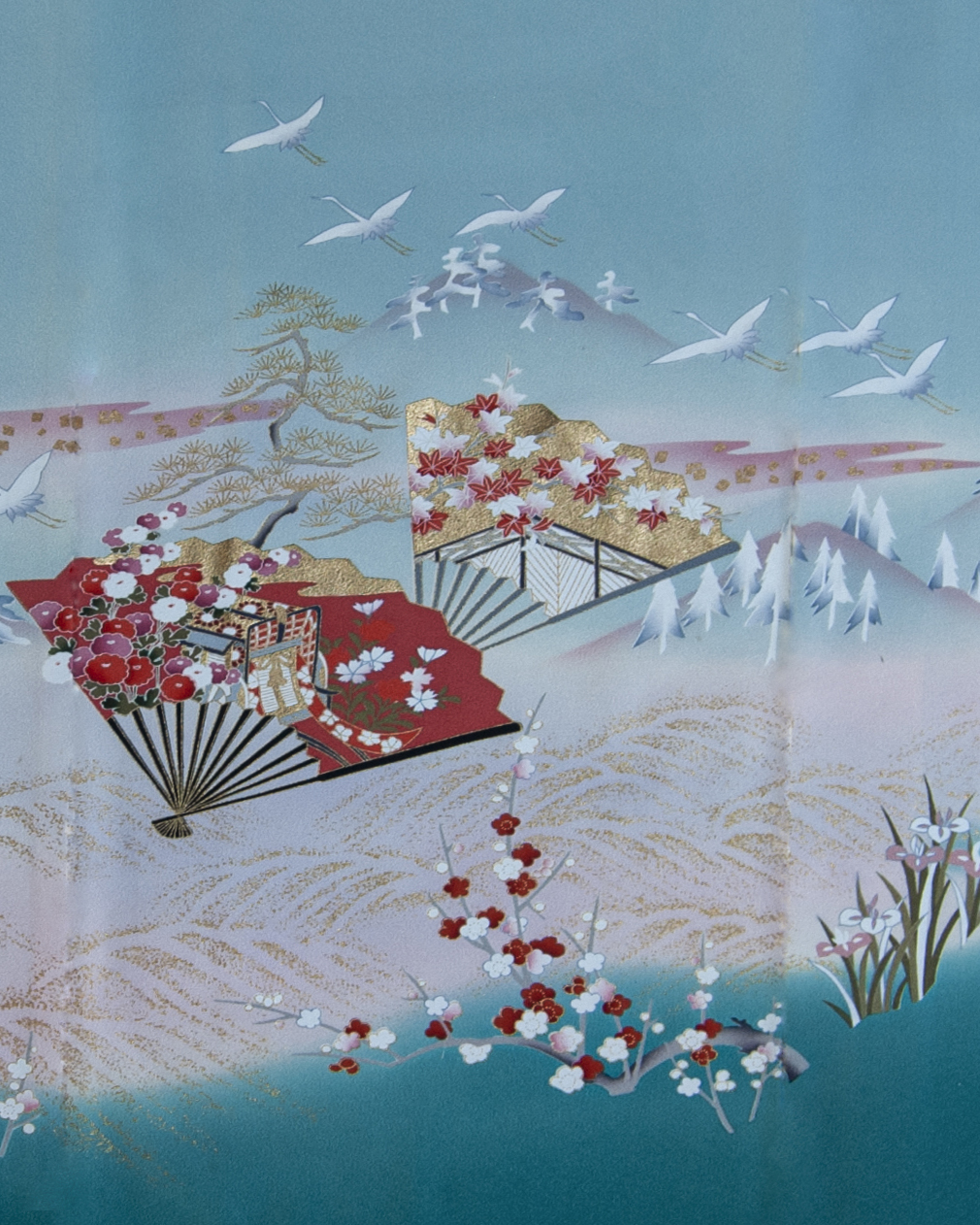
Hem band detail — cranes in flight over layered landscape textures.
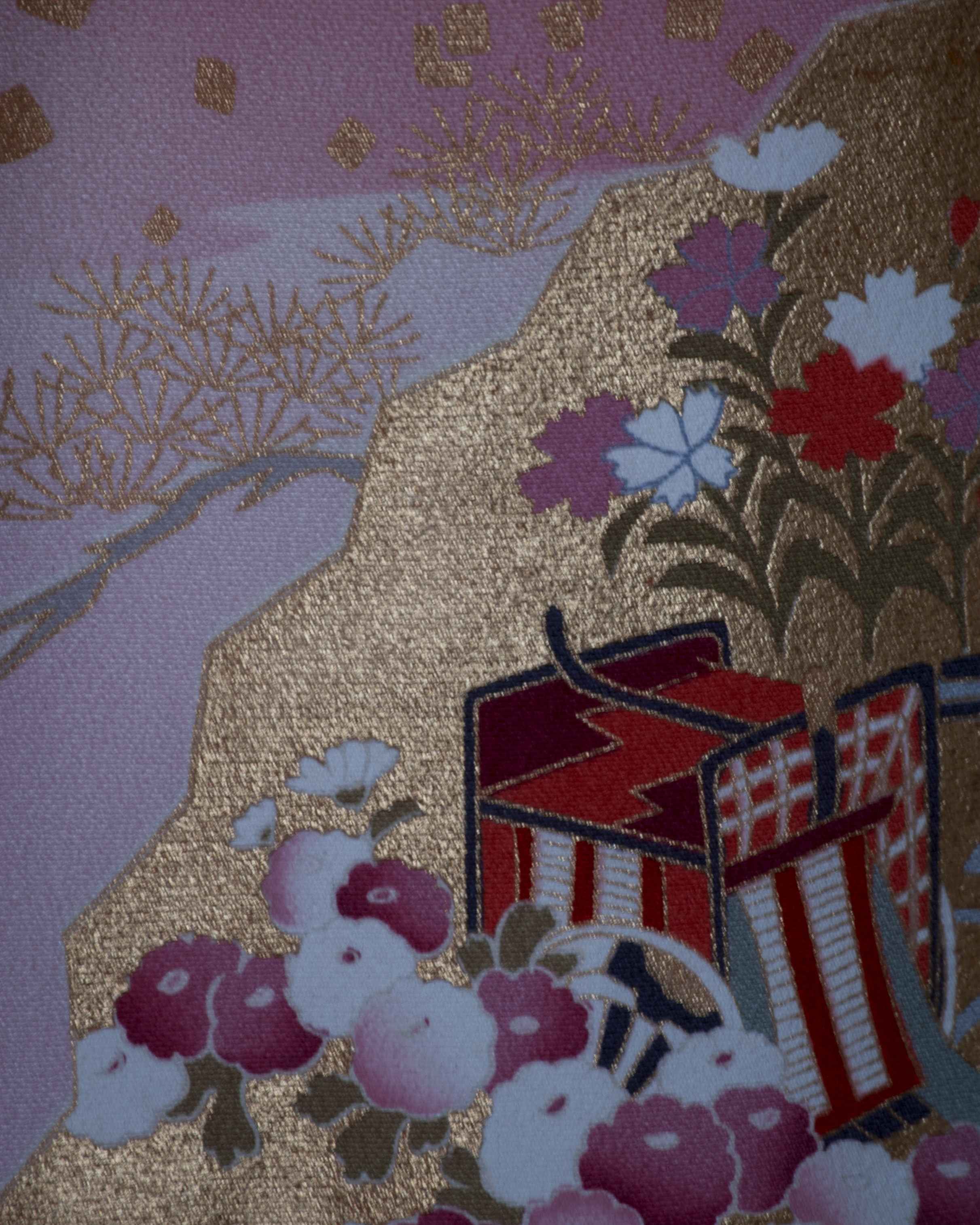
Ground field transitions from pale blue to teal near the hem. The lower third carries a continuous landscape band across panels. Motifs include folding fans, cranes, pine branches, flowering plum, chrysanthemum-like blossoms, grasses, and small architectural elements.
Placement is hem-focused with sparse trailing branches in the upper body and sleeves. Motif scale ranges from large fans to fine grasses. Metallic gold is present in fan interiors and landscape textures.
Techniques
Likely hand-painted yuzen resist dye with layered tonal gradients. The silk has a soft, even surface that allows the pigments to settle cleanly without visible texture interference. The hand is supple and fluid, supporting the continuous hem composition across panels.
Gold appears as controlled dusting and painted metallic detail rather than heavy foil leaf. Brushwork remains precise; pigment boundaries stay crisp even along complex fan ribs and floral contours, indicating careful resist control and measured application.position flows across seams, indicating planned layout painting across the garment panels.
Motifs & significance
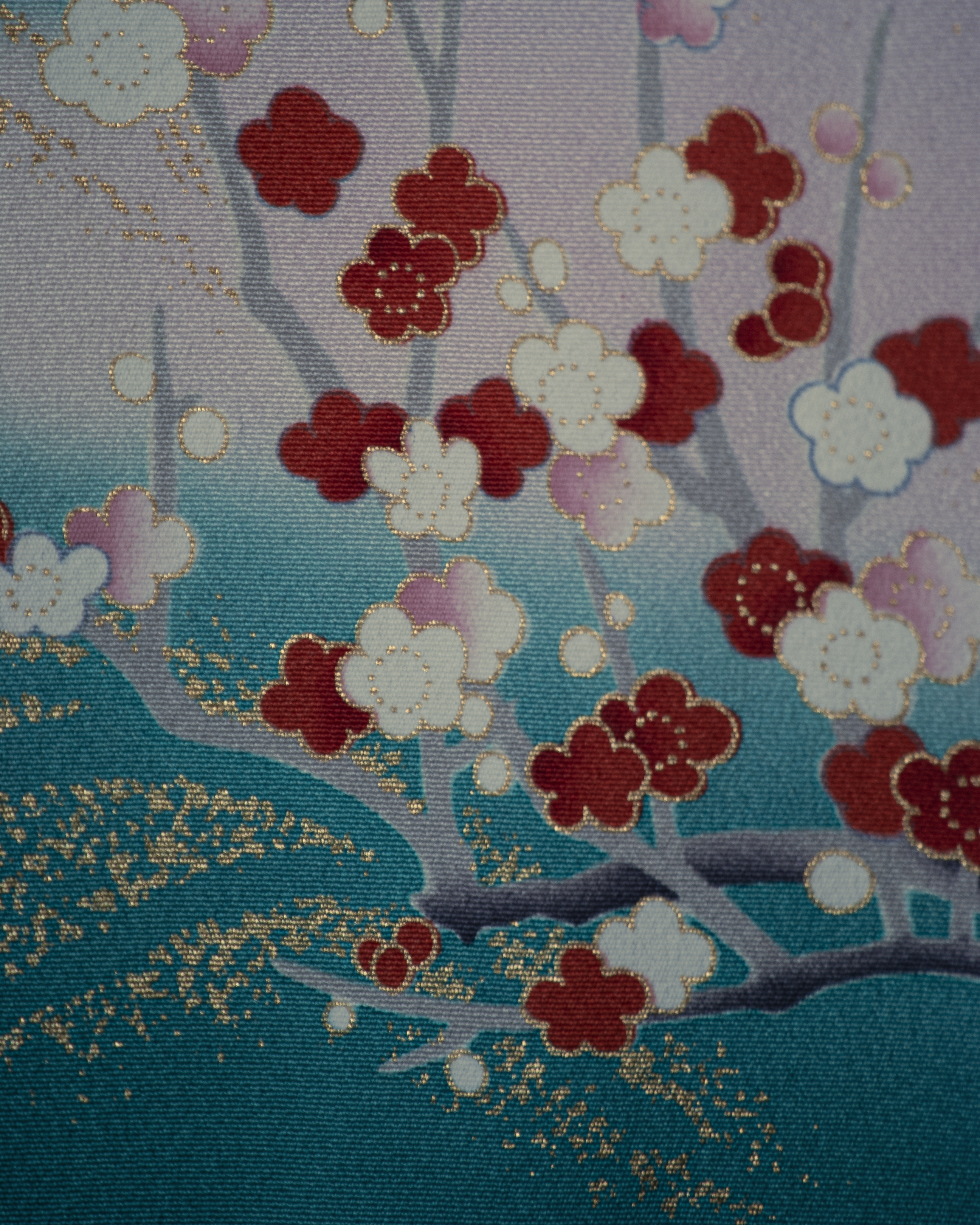
The imagery suggests late winter moving into early spring — a transitional season expressed through plum blossoms against enduring pine, with cranes moving across a quiet landscape. Plum signals the first resilience of the year, pine steadiness through cold months, and cranes carry associations of longevity and auspicious celebration.
Folding fans (ōgi) are read as unfolding fortune and expansion. The hem-focused panoramic composition indicates formal visit-wear, while the architectural references read as classical rather than rustic scenery.
Dating
Estimated Late Shōwa (c. 1970–1985). The soft pastel palette, moderate motif density, and controlled metallic detailing align with mid-to-late Shōwa formal kimono production.
Condition
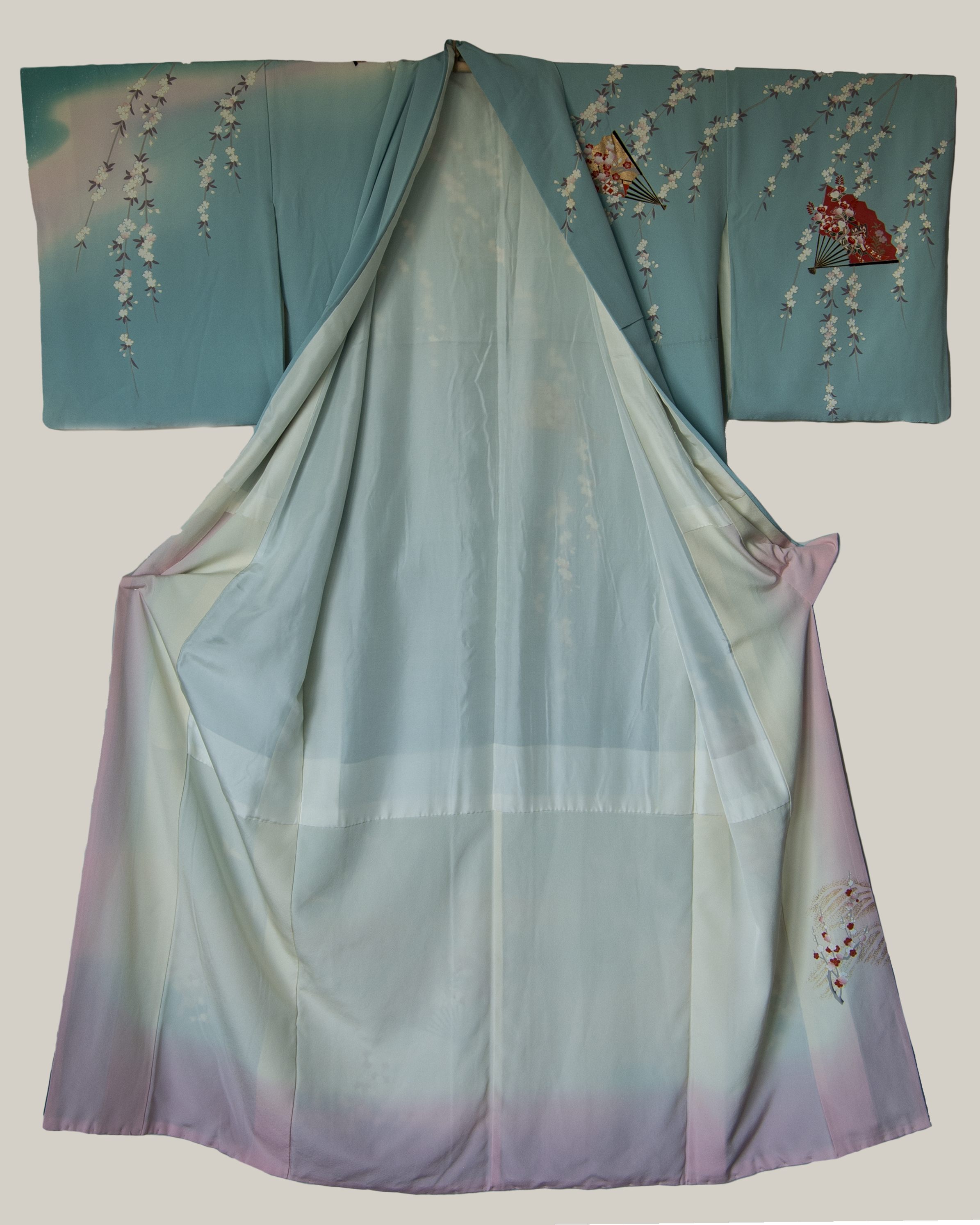
Structurally intact. Creasing consistent with long-term storage and display folding. Collar shows visible soiling typical of wear. Scattered, medium-sized pale stains are present across the silk ground, subtly interrupting the field but not structurally compromising the textile.
Interactive map
Click on a kimono panel to see the works derived from it.
Tags
Source Textile: ST-01
Trace:
cleve.st / ST-01